Address
3540 Toringdon Way, Suite 200, Charlotte, NC 28277


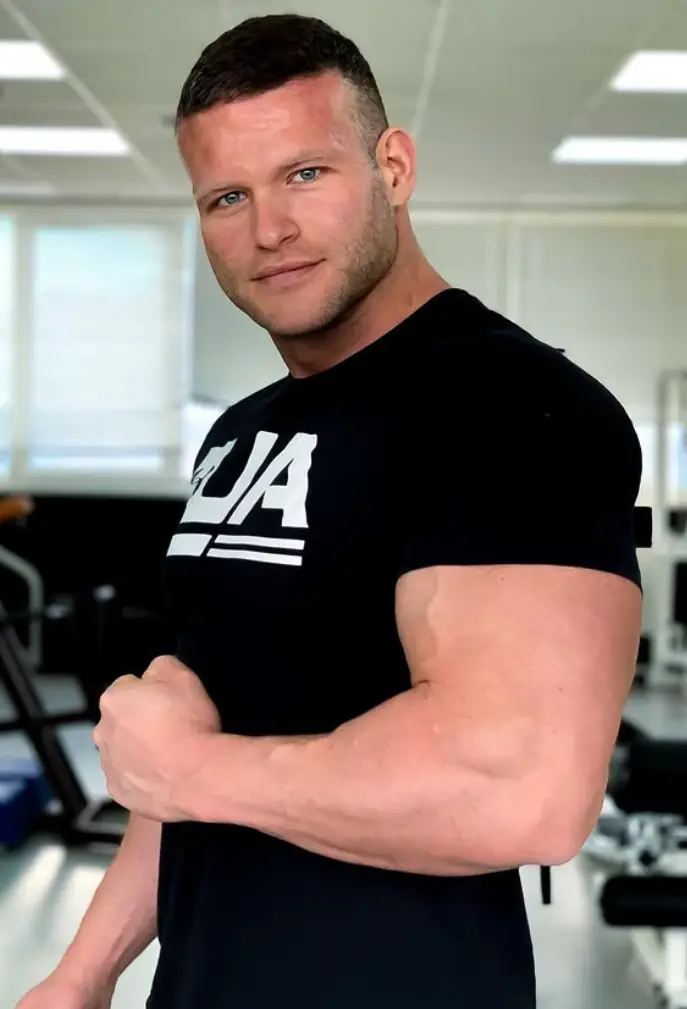
(37‑year‑old coach from Kyiv; awards: NABBA/WFF Gold 2008, WBP 3rd place 2012, WABBA Europe Champ 3rd place 2017, NABBA Gold 2007)
Valerii:
Hi Oleksii! Glad to talk with you. Your achievements and plans to open a chain of fitness clubs in Ukraine are truly impressive. Let’s start with financial questions, because proper capital management is the key to a stable future.
- Income structure and financial management
Valerii:
How do you manage your finances and allocate your income? How much comes from sports contracts, sponsorship and other sources? Who helps you with this?
Oleksii:
Right now I keep my finger on the pulse of my budget myself. My income, which does not exceed 100,000 UAH per month, mainly comes from coaching, competition prizes and occasional sponsorship contracts. I don’t have a team of expensive analysts—I use simple spreadsheets and advice from experienced friends. - Additional income sources
Valerii:
What income streams do you have besides sport and sponsorship? Do you have plans to develop alternative directions?
Oleksii:
My main income is sport, but I’m already planning to create a chain of fitness clubs with my own programme. That will diversify my revenue. I’m also thinking about conducting master classes and online consultations to broaden my financial base. - Investment strategy
Valerii:
What portion of your income do you invest and in which financial instruments? How do you assess risks?
Oleksii:
I invest about 10–15 % in small bank deposits and a couple of promising projects. I assess the risks myself, relying on my own experience—so far I have no professional financial advisers. - Expense management
Valerii:
Which expenses are priorities for you and how do you control them?
Oleksii:
The main ones are maintaining the training hall, buying necessary equipment and personal development. I try to minimise and plan the rest using simple spreadsheets. Status purchases aren’t my thing—the main thing is quality and efficiency. - Post‑career planning
Valerii:
How do you intend to ensure financial stability after finishing active sports?
Oleksii:
I’ve been thinking about the future for a long time. Opening a chain of clubs is my way to secure stable income after sport. I also regularly set aside part of my earnings to build a rainy‑day fund. - Peak‑career assessment
Valerii:
When, in your opinion, was or will be the peak of your athletic career, and how does that influence your financial decisions?
Oleksii:
Judging by my achievements, the peak is probably in the past. Now I’m focused on coaching and business development, knowing that sporting success comes and goes. - Risk management
Valerii:
What steps do you take to minimise financial risks connected with career changes? Have you created a reserve fund?
Oleksii:
Yes, I always try to keep about 20 % of my income for unforeseen expenses. It helps me feel more confident, because force‑majeure situations—be it injuries or other problems—can always arise. - Diversification through business and real estate
Valerii:
Do you plan to diversify income through investments in real estate, securities or new business projects?
Oleksii:
My main project is the chain of fitness clubs. As for real estate and securities, I’m still involved only in small investments, since I want to focus on developing my core business. - The role of financial advisers
Valerii:
What role do professional financial consultants play in your capital management?
Oleksii:
Frankly, I don’t have the budget for professional advisers, so I rely on advice from friends and colleagues I trust and try to figure things out myself. - Medium‑term financial goals
Valerii:
What financial goals do you set for the next 5–10 years?
Oleksii:
The main goal is to open a network of clubs across Ukraine, which should raise my income to 500,000–1 million UAH per month. The vision for the future is stable development and growth in the local market. - Tax planning
Valerii:
How much do you take tax aspects into account when planning your finances and investments? How do you structure assets from a tax‑optimisation standpoint?
Oleksii:
I try to take taxes into account, but I haven’t delved deeply into the subject. I usually use standard banking products where all the tax nuances are already spelled out. Over time I’ll probably look into optimisation in more detail, but for now I trust the experience of acquaintances. - Migration plans
Valerii:
Do you plan to move to another country in the future or sign contracts abroad? How might that affect your financial planning?
Oleksii:
You know, I’m not going to leave Ukraine. I love my country and want to develop sport here. Therefore my financial decisions are based on stable local business development without changing jurisdictions. - Financial experience lessons
Valerii:
What lessons have you learned from past financial management and what do you plan to improve in the future? What mistakes have you faced and how did you fix them?
Oleksii:
Over the years of training I’ve realised that discipline in financial matters is as important as in the gym. I used to make mistakes spending on status items that brought no real benefit. Now I invest more in business development and savings, which helps me plan the future more consciously.